
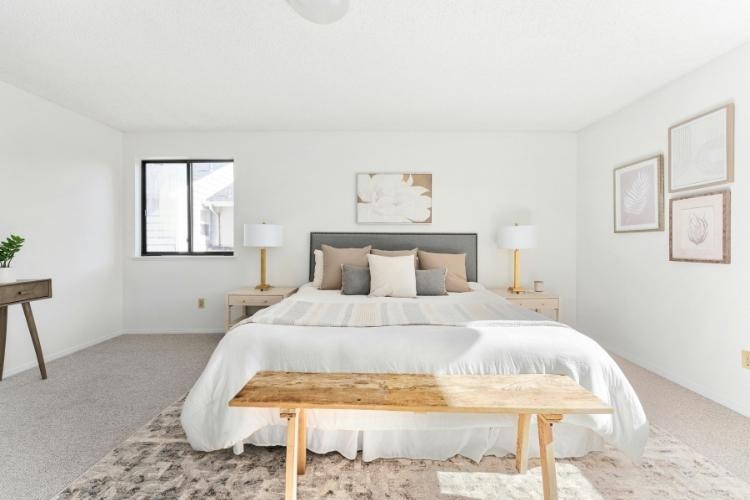
What Makes a Bedroom Look Expensive? 8 Details That Matter
[Photo by Lisa Anna on Canva]
An expensive-looking bedroom has less to do with filling the room with costly furniture and more to do with making thoughtful choices. Proportion, texture, lighting, and even the way everyday items are arranged can change how polished a space feels.
Many of the details that give hotel rooms and professionally styled bedrooms their appeal can be recreated without replacing everything you own. The trick is knowing where to focus.
From getting the lighting right to choosing bedding that looks and feels good, these eight details can help create a bedroom that feels considered, comfortable, and more luxurious.
1. Lighting That Works
Keep your main ceiling light for general illumination, then introduce smaller light sources around the room. Bedside lamps are an obvious starting point, while a floor lamp can work well beside a chair or dressing area.
Lamps don’t have to match perfectly, but they should fit the colors, shapes, and materials already in the room. Pay attention to scale as well. Tiny lamps on large bedside tables can look lost, while oversized shades may overwhelm a compact room.
2. High-Quality Bedding
Start with a coordinated foundation. That does not mean everything needs to come from an identical set. Instead, choose colors and textures that sit comfortably together. A restrained base also gives you more freedom to introduce personality through cushions, throws, or a patterned layer.
Quality matters because bedding is not purely decorative. It needs to feel comfortable and cope with regular use and washing. Doze Bedding specializes in bedding, so homeowners looking to refresh this part of the room can shop here for options that work with their preferred color scheme and overall bedroom style.
Once you have chosen the main bedding, resist the temptation to cover every available inch with decorative cushions. A few well-chosen layers tend to look more considered than a bed that requires several minutes of rearranging every morning and evening.
3. Curtains That Look Right for the Window
Start by checking the width and height of the window rather than guessing. Curtains that appear too short or narrow can make the arrangement feel awkward. Where the room allows, positioning the curtain pole above the window can also draw attention upwards.
Fabric should work with the rest of the room. If the bedding, wallpaper and rug already contain noticeable patterns, quieter curtains may provide balance. In a simpler bedroom, the window treatment can carry more color or texture.
Remember the practical requirements as well. Privacy, daylight, and the position of furniture matter as much as appearance.
4. A Clear and Consistent Color Palette
Begin with the elements that are difficult or expensive to change, such as flooring, large furniture, and wall color. Then choose smaller pieces that complement them.
A neutral bedroom, for example, does not have to consist of identical shades of beige. Warm whites, browns, muted greens, and natural wood can create variation without making the space feel disconnected. A colorful bedroom can follow the same principle by repeating selected shades in smaller details.
Consistency is more important than perfect matching. A room where every item is the same shade can feel overly coordinated rather than naturally put together.
5. Furniture That Fits the Scale of the Room
Before adding another chest, chair, or bedside table, consider the space around the furniture you already have. Leaving some visible floor and wall space gives individual pieces room to breathe.
The same principle applies in a small bedroom. Slim bedside tables may suit the proportions better than bulky cabinets, while a tall chest of drawers can provide storage without taking up as much floor area.
Repositioning pieces, reducing unnecessary items, and keeping surfaces relatively clear can make the layout feel more deliberate.
6. Texture Without Excessive Decoration
Texture is one of the easiest ways to add depth to a bedroom. A room made entirely from smooth, similar surfaces can feel flat, even when the color scheme works well.
Look for opportunities to vary materials. Curtains, rugs, upholstered furniture, bedding and throws can all introduce different finishes without filling the room with ornaments.
The key is restraint. If you already have a textured rug, patterned curtains, decorative wallpaper and several layers on the bed, adding more may make the room feel busy rather than luxurious. Choose a few areas to emphasize, and let simpler surfaces provide contrast.
7. Less Clutter on Display
Luxury bedrooms tend to have one thing in common: you can actually see the furniture.
Everyday clutter can quickly undermine a carefully decorated room. Charging cables, laundry, half-used toiletries, and piles of paperwork draw attention away from the details you deliberately chose.
Rather than aiming for an unrealistic bedroom with nothing on display, give frequently used belongings designated places. A tray can organize items on a dressing table, while a bedside drawer keeps chargers, reading glasses, and other essentials close without cluttering the surface.
8. Finishing Touches That Feel Personal
A polished bedroom should still look as though somebody lives there. Artwork, books, photographs, and meaningful objects prevent a carefully coordinated space from feeling like a furniture showroom.
Choose these details selectively. One thoughtfully placed piece of artwork can have more impact than several small items competing for attention. The same goes for decorative objects on bedside tables and drawers.
Plants, books and framed photographs can also introduce personality without requiring you to change the wider decorating scheme. Leave enough space around these pieces so they appear intentional rather than squeezed into the nearest available gap.
Final Thoughts
Making a bedroom look expensive is rarely about buying the most expensive version of everything. The overall impression comes from how individual decisions work together.
Start with the elements that have the greatest visual impact, particularly the bed, lighting, and window treatments. From there, refine the color palette, reconsider the scale of furniture, and use texture selectively. Finally, clear unnecessary clutter and introduce a few personal details.
The result should not feel like a showroom. A well-designed bedroom still needs to be practical, comfortable, and personal. When you consider those qualities alongside proportion and thoughtful styling, even relatively simple changes can give the whole room a more polished finish.