
Stop Buying These 15 Things: Homemade Pantry Staples That Save $200/Month.
If you feel like rising grocery costs are eating your budget whole, you’re not alone. Many people are stressed about their finances and looking for simple, achievable ways to save money at home. You don’t need a complicated budget or extreme couponing to take back control; you just need to be more intentional about what you buy. This is where homemade pantry staples to save money come into play. We are challenging the myth that convenience is the only option. In this ultimate DIY savings showdown, we prove that making 15 common household staples from scratch is not only cheaper but also healthier for your family. Ready to start saving and gain some financial peace? Let’s dive in.
Table of Contents
- DIY Dairy Staples: The Truth About Homemade Butter
- Budget Baking Mixes: Skip the Boxed Convenience
- Sauce & Condiment Savings: Easy Homemade Swaps
- Kitchen Staple Savings: The Everything Else List
- Final Tally: How Much Can You Really Save?
Staple #1: Homemade Butter (The Dairy DIY Showdown)
Is it cheaper to buy heavy cream and make your own butter?
Yes, making your own butter is often cheaper, and it feels like a victory against rising grocery costs. The math is simple: One quart of heavy cream (or four cups) will yield about a full pound of fresh butter plus two cups of valuable buttermilk. The real savings come from maximizing this two-for-one purchase. By saving the buttermilk to use in baking or pancakes, you essentially buy one ingredient but get two staples, stretching your dollar further.
Is making butter from scratch healthier?
Making butter from scratch is generally healthier because it allows you to control the ingredients. Store-bought butters may contain artificial colorings, added flavoring, or preservatives, all of which you can omit. If you use cream from grass-fed cows, your homemade butter will also have a better ratio of omega fatty acids and higher levels of essential vitamins. Furthermore, making cultured butter from fermented cream adds beneficial probiotics.
What’s the best cream for making butter?
The best cream for butter is heavy cream (or heavy whipping cream) that has a fat content of 36% or higher. For the best flavor and nutritional profile, look for pasteurized cream from grass-fed or pasture-raised cows. It is important to avoid cream labeled “ultra-pasteurized” (UHT) as the high-heat process can disrupt the fat molecules, making it difficult for the cream to churn into butter.
How long does homemade butter last?
Homemade butter lasts for two to three weeks in the refrigerator if stored properly in an airtight container. It is vital to ensure that all residual buttermilk is thoroughly rinsed out during the churning process, as any remaining liquid will spoil the butter faster. For longer storage, butter can be wrapped tightly and frozen for six to nine months.
Ready to start churning? Get this full, easy step-by-step guide to Homemade Butter (with Buttermilk) now, and let’s move on to conquering the bakery aisle!

Budget Baking Mixes: Skip the Boxed Convenience
The boxed mixes in the baking aisle are convenient, but they’re often packed with preservatives, stabilizers, and extra sugar that your homemade versions don’t need. Creating your own base mixes is a simple afternoon task that translates to huge savings and much healthier breakfasts and desserts.
Staple #2: Homemade Pancake/Waffle Mix
- The Savings: The difference between a store-brand box mix and a bag of flour is significant. Making your own mix saves you between 50% and 70% per serving compared to the pre-packaged versions.
- The Value: By pre-mixing the dry ingredients (flour, sugar, baking powder, salt), you achieve the same convenience as a boxed mix—just scoop and add the wet ingredients—but without the artificial fillers.
➡️ Get the recipe: Homemade Pancake/Waffle Mix in Minutes

Staple #3: DIY Yellow Cake Mix
- The Savings: A box of cake mix costs significantly more than the combined cost of the dry ingredients needed for two or three cakes. You can save money by buying flour and sugar in bulk.
- The Value: A homemade mix allows you to control the quality of the sugar and use vanilla bean powder instead of artificial vanilla flavor, resulting in a cake that tastes infinitely better and is a much healthier option for family celebrations.
➡️ Get the recipe: DIY Yellow Cake Mix (The Healthier Box Mix)

Sauce & Condiment Savings: Easy Homemade Swaps
Pre-made condiments are notoriously full of high-fructose corn syrup, preservatives, and unnecessary sugars. You can slash your grocery bill and improve the nutritional quality of your meals by tackling these everyday items.
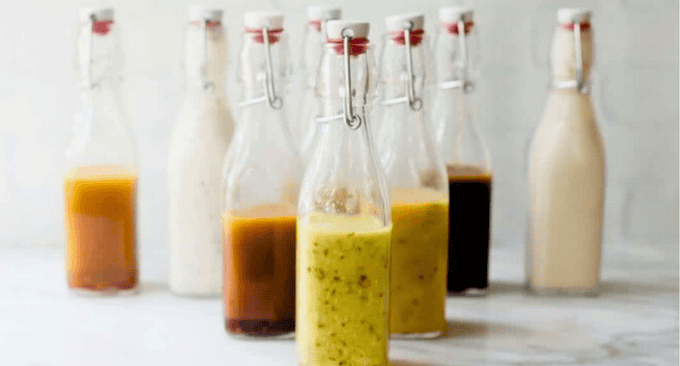
Staple #4: Homemade Salad Dressing (Ranch/Vinaigrette Base)
- The Savings: A single bottle of store-bought dressing can cost more than the ingredients required to make three batches at home. You save money by buying base ingredients (like vinegar, oil, and herbs) in bulk.
- The Value: By making your own, you completely avoid high-sugar, low-quality oils, and artificial colorings. You control the flavor and can easily adjust for dietary needs like low-sodium or low-fat.
➡️ Get the recipe: Quick & Healthy DIY Salad Dressings

Staple #5: Taco Seasoning/Fajita Mix
- The Savings: Boxed taco seasoning packets are one of the most overpriced items in the spice aisle. You can buy the individual spices in bulk for a fraction of the cost, making hundreds of servings for the price of a few packets.
- The Value: Homemade mixes let you manage the salt content and ensure the spices are fresh, giving your food a much brighter, more intense flavor than what you get from pre-mixed, heavily processed packets.
➡️ Get the recipe: The Ultimate Homemade Taco Seasoning Blend

Kitchen Staple Savings: The Everything Else List
Some of the most significant savings come from making high-turnover, low-cost convenience items that are almost always overpriced and easy to mass-produce at home.
Staple #6: Broth/Stock
- The Savings: A quart of good-quality, pre-made broth or stock can be expensive. By saving kitchen scraps like vegetable trimmings, chicken bones, etc., you can make large quantities for essentially zero cost, turning trash into a premium pantry item.
- The Value: Homemade broth contains less sodium and MSG than most store-bought varieties, and the depth of flavor is far superior, making your soups and sauces taste restaurant-quality.
➡️ Get the recipe: Zero-Waste, Healthy Homemade Broth

Staple #7: Vanilla Extract
- The Savings: Pure vanilla extract is a costly item. While the upfront cost for vanilla beans and alcohol is an investment, the final product yields a quantity that is dramatically cheaper per ounce than buying commercial extract over time.
- The Value: The flavor of homemade vanilla is robust, pure, and far surpasses the artificial or weakened taste of many inexpensive store brands. Plus, a homemade bottle makes a beautiful, thoughtful gift. (You can get an 8-pack of the extract bottles here.)
➡️ Get the recipe: How to Make Vanilla Extract (2 Ingredients)

Staple #8: Hummus
- The Savings: Pre-packaged hummus is expensive and sold in small quantities. By starting with dried chickpeas and making a large batch, you can produce hummus for a fraction of the store-bought price.
- The Value: Homemade hummus is far creamier and lets you use high-quality tahini and olive oil. You also avoid the common preservatives and acidity regulators found in commercial brands.
➡️ Get the recipe: Creamy Homemade Hummus with Dried Chickpeas

Staple #9: Refried Beans
- The Savings: Similar to hummus, buying canned refried beans is convenient but costly. A bag of dried pinto beans is extremely cheap and can yield several containers of your own refried beans, saving you a substantial amount of money per meal.
- The Value: Store-bought refried beans often contain excessive lard and high sodium levels. When you make them at home, you can use healthier fats and control the seasonings for a better texture and flavor.
➡️ Get the recipe: The Best Homemade Refried Beans (Healthier & Cheaper)

Staple #10: Breadcrumbs
- The Savings: Never buy a canister of breadcrumbs again! Using leftover or slightly stale bread that would otherwise be thrown out allows you to create high-quality crumbs for zero extra cost, making this one of the biggest money-savers on the list.
- The Value: Homemade breadcrumbs have superior texture for coating and frying, and you can season them exactly how you like (e.g., Italian, Panko-style, or plain) using fresh herbs from your pantry.
➡️ Get the recipe: Zero-Waste Homemade Breadcrumbs

Staple #11: Yogurt
- The Savings: The only ingredient you need is milk, which is significantly cheaper than buying individual containers of yogurt. The process is simple and saves you substantially on your dairy budget.
- The Value: By making it at home, you control the culturing time (for tanginess) and the thickness, and you eliminate the added sugars, thickeners, and artificial fruit purees found in many commercial yogurts.
➡️ Get the recipe: How to Make Probiotic-Rich Homemade Yogurt

Staple #12: Brown Sugar
- The Savings: Brown sugar is simply white granulated sugar with molasses added back in. By buying these two basic ingredients in bulk, you save money by making your own on demand instead of purchasing two different bags of processed sugar.
- The Value: Homemade brown sugar is softer, fresher, and has a more robust flavor since you can control the ratio of molasses to white sugar, which is perfect for baking. (Check the price on Blackstrap molasses here.)
➡️ Get the recipe: Make Brown Sugar with Two Ingredients

Staple #13: Powdered Sugar (Confectioners’ Sugar)
- The Savings: Powdered sugar is just white granulated sugar blended with a small amount of cornstarch. If you have a blender or food processor, you are saving money by only needing to purchase one type of sugar in bulk instead of two.
- The Value: It takes seconds to make exactly the amount you need for frosting or dusting, ensuring your sugar is always fresh and clump-free for better baking results.
➡️ Get the recipe: DIY Powdered Sugar (The Quickest Pantry Staple)

Staple #14: Mayonnaise
- The Savings: Store-bought mayonnaise is highly profitable for manufacturers. By using common pantry ingredients like oil, eggs, and lemon juice, you can make fresh, high-quality mayo for significantly less than a comparable premium jar.
- The Value: Homemade mayonnaise has a richness and purity of flavor that is unmatched. You avoid common commercial ingredients like soybean oil and high-fructose corn syrup, and you can control the oil type for a healthier fat profile.
➡️ Get the recipe: Classic Homemade Mayonnaise in 5 Minutes

Staple #15: Croutons
- The Savings: Croutons are one of the most unnecessarily expensive convenience items. They are purely made from stale bread (which would otherwise be wasted), oil, and seasoning. You save money by turning scraps into a crunchy, delicious topping for free.
- The Value: Homemade croutons have a superior crunch and you can infuse them with fresh herbs like rosemary and thyme, resulting in a flavor profile that dramatically elevates any salad or soup compared to a store-bought box.
➡️ Get the recipe: Easy, Crispy Homemade Croutons

Final Tally: How Much Can You Really Save?
While the cost of ingredients fluctuates, the savings from adopting these 15 DIY staples are significant and measurable.
Imagine the annual impact of these simple swaps:
- Butter & Dairy: If you consume 4 lbs of butter and 1 gallon of yogurt per month, making them yourself could easily save you $10 to $15 per month, totaling over $120 to $180 annually.
- Mixes & Condiments: Cutting out 1 box of pancake mix, 1 jar of mayonnaise, and 4 packets of taco seasoning per month can save an additional $10 to $12 per month, or over $140 annually.
- “Free” Staples: Items like Broth, Breadcrumbs, and Croutons are made from kitchen scraps, providing a near-100% savings rate on those items.
The Real Victory Isn’t Just Money
The true value of this DIY showdown isn’t the total cash savings (though a few hundred dollars a year is a great start!). It’s the power you gain by controlling the quality of the food you put on your table. You are choosing fewer preservatives, fewer added sugars, and healthier fats. This journey from store-bought to homemade is the easiest and most sustainable way to lower your grocery bill while increasing your family’s well-being.
Ready to transform your kitchen? Choose one staple from this list, make it today, and start claiming your financial peace!