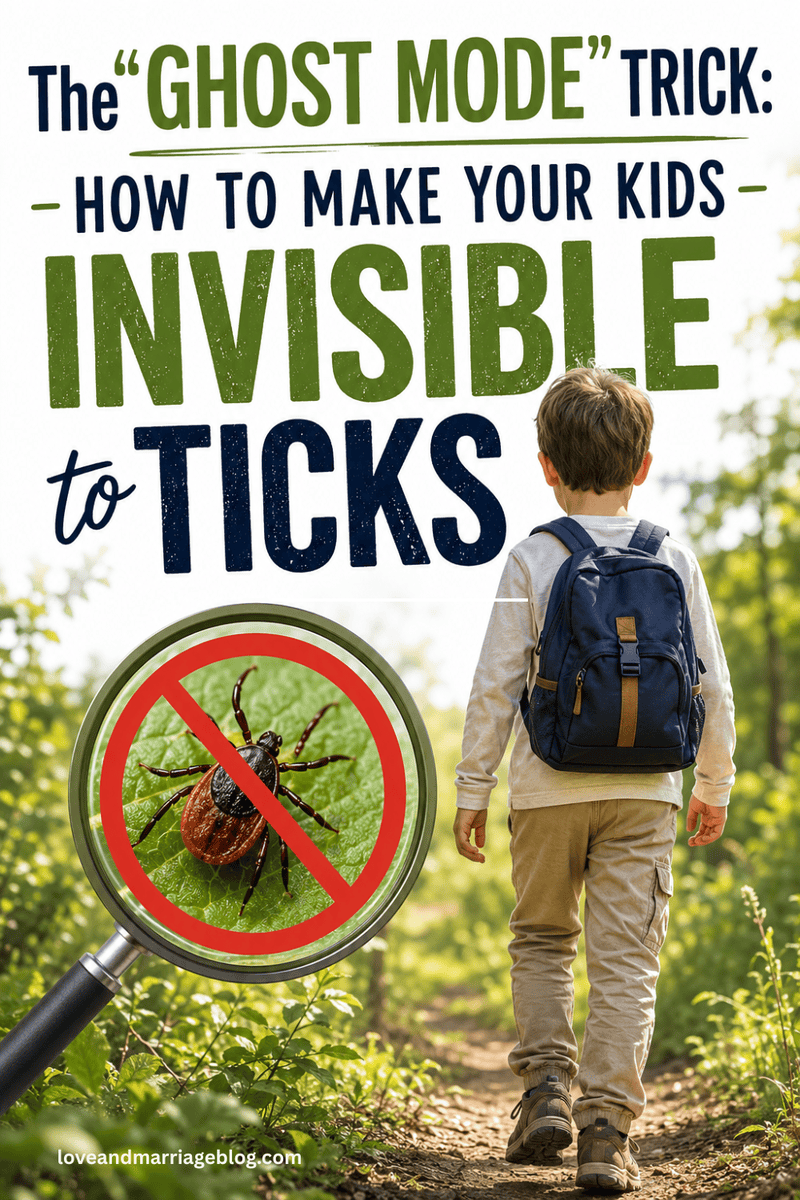

The “Ghost Mode” Trick: How to Make Your Kids Invisible to Ticks
Have you ever sprayed your kids down with traditional bug spray, sent them out to the backyard, and still found a tick crawling on them a few hours later?
If you think standard repellents or just keeping the grass mown is enough to protect your family, you are missing a massive piece of the safety puzzle. There is a specific trick that essentially activates “Ghost Mode” against backyard pests, taking your children entirely off their radar. And the best part? It relies on a natural barrier that science has recently proven to be as powerful as heavy chemicals.
How do you take your family completely off a tick’s radar?
You can trigger a total sensory blackout by using high-cedrol cedarwood oil. Recent peer-reviewed research by the USDA Agricultural Research Service verified that this natural compound actively repels black-legged tick nymphs with an efficacy equal to DEET, making it biologically impossible for them to locate a host.
The Science of the “Ghost Mode” Blackout
Ticks don’t have eyes to hunt your family; they rely on specialized sensory receptors to track carbon dioxide, heat, and scent trails. When you use high-cedrol cedarwood oil, you aren’t just masking a human scent—you are completely flooding those receptors.
When a tick encounters this specific compound, it experiences a total sensory disconnect. It can no longer target or locate a host, effectively erasing your kids from their tracking system. At higher concentrations, the natural oils also act to dehydrate the pest’s exoskeleton on contact.
To understand how this natural powerhouse stacks up against standard drugstore chemicals, look at the data:
| Feature | Cedarwood Oil / Heartwood | Synthetic DEET |
| Efficacy on Nymphs | Equal to DEET (USDA verified) | Industry standard |
| Mode of Action | Sensory disruption & dehydration | Olfactory masking |
| Environmental Safety | Safe for beneficial pollinators | Highly toxic to aquatic life |
| The Catch | Degrades under heavy UV/Rain | Long-lasting chemical residual |
The Backyard Strategy: Where Ticks Actually Hide
You don’t need to live next to a massive forest to deal with ticks. Small backyard pests frequently hitch rides on everyday wildlife like birds, squirrels, and mice, dropping right into the areas where your family hangs out.
To activate “Ghost Mode” in your backyard, you just need a simple, two-pronged approach:
- The Footwear Shield: Since pure essential oils should never go directly on young skin, the secret is to treat their gear. Mist a safe, diluted cedarwood oil spray like Wondercide heavily onto your kids’ shoes, socks, and pant cuffs before they head out to play. Because ticks latch onto footwear first and crawl upward, this creates an immediate roadblock the moment they make contact with the fabric.
- The Play Zone Border: Instead of trying to spray an entire lawn, target the specific zones where your kids actually spend their time. Spray high-cedrol cedar oil or spread Cedarcide cedar granules in a simple 3-foot band right around the edge of the patio, the wooden deck, or the perimeter of a sandbox and play set.
By securing these immediate play boundaries and treating their shoes, you close the safety gap most parents completely overlook and keep your family entirely off the radar without relying on harsh chemicals.
If you want to mix your own clothing spray or fill a backyard pump sprayer, you can grab a bottle of pure Cliganic Organic Cedarwood Essential Oil and mix it with a carrier oil or water.
My Go-To Rule for Choosing Cedar Oil
While I have a couple of specific brands I keep stocked in our household cabinet, you don’t have to use the exact ones I buy. However, you must make sure whatever brand you choose meets these two rules, or “Ghost Mode” won’t work:
- It must be sourced from Eastern Red Cedar (Juniperus virginiana). There are many types of cedar (such as Atlas or Texas cedar), but USDA research specifically focuses on the heartwood compounds of Eastern Red Cedar. Check the botanical name on the back of the bottle.
- It must be real oil, not “fragrance”: Cheap drugstore oils often use synthetic cedar perfumes. Ticks don’t care about a nice smell; they are repelled by the physical, active compound called cedrol. Look for 100% pure essential oil extracted via steam or C02 distillation.